
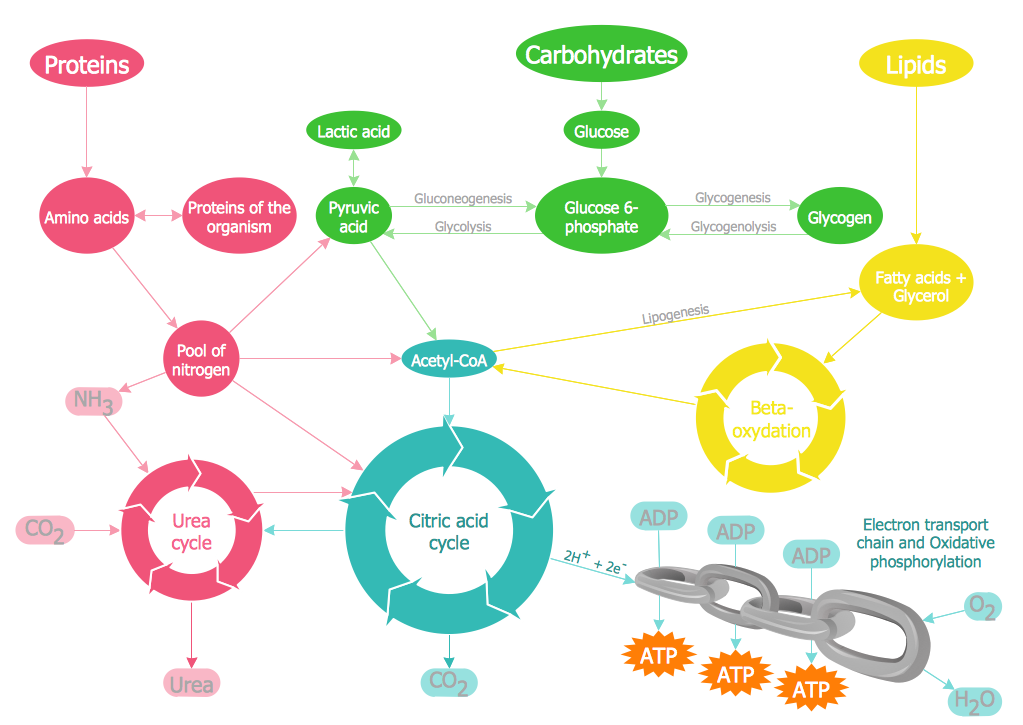
Metabolism comprises all chemical reactions in living organisms, divided into energy-releasing catabolism (breaking down molecules) and energy-requiring anabolism (synthesizing compounds). Major pathways include glycolysis, the citric acid cycle (TCA), and the electron transport chain, which convert nutrients into energy (ATP). These processes are tightly regulated and compartmentalized within cells.
Core Concepts in Metabolism
Catabolism: Breaks down large molecules (e.g., glucose, fats) to release energy and produce smaller molecules.
Anabolism: Consumes energy to build complex molecules (e.g., proteins, nucleic acids) from smaller precursors.
Metabolic Pathways: A series of connected, usually irreversible reactions that are highly regulated, often occurring in specific cellular compartments.
Key Intermediates: Acetyl-CoA is a central molecule in metabolism, serving in ATP generation, catabolism, and anabolism. Major Metabolic Pathways Carbohydrate
Metabolism:
Glycolysis: The 10-step breakdown of glucose to pyruvate, producing ATP and NADH.
Gluconeogenesis: Synthesis of glucose from non-carbohydrate precursors, primarily in the liver.
Lipid Metabolism:\(\beta \)-Oxidation: Breaking down fatty acids to Acetyl-CoA for energy.
Carnitine Shuttle: Necessary for transporting fatty acids.
Protein Metabolism: Involves amino acid breakdown and synthesis.
Energy Production (Cellular Respiration):
Citric Acid Cycle (TCA/Krebs): Oxidizes acetyl-CoA to \(CO_{2}\) and reduces coenzymes.
Electron Transport Chain (ETC): Uses NADH/FADH2 to generate the majority of ATP.
Regulation and Characteristics Compartmentalization:
Eukaryotic cells segregate pathways (e.g., TCA cycle in mitochondria) to control metabolism effectively.
Regulation: Pathways are regulated by enzymes to maintain homeostasis and respond to energy needs.
Parallel Routes: Anabolic and catabolic pathways often differ in at least one step to allow independent regulation.
Core Concepts in Metabolism
Catabolism: Breaks down large molecules (e.g., glucose, fats) to release energy and produce smaller molecules.
Anabolism: Consumes energy to build complex molecules (e.g., proteins, nucleic acids) from smaller precursors.
Metabolic Pathways: A series of connected, usually irreversible reactions that are highly regulated, often occurring in specific cellular compartments.
Key Intermediates: Acetyl-CoA is a central molecule in metabolism, serving in ATP generation, catabolism, and anabolism. Major Metabolic Pathways Carbohydrate
Metabolism:
Glycolysis: The 10-step breakdown of glucose to pyruvate, producing ATP and NADH.
Gluconeogenesis: Synthesis of glucose from non-carbohydrate precursors, primarily in the liver.
Lipid Metabolism:\(\beta \)-Oxidation: Breaking down fatty acids to Acetyl-CoA for energy.
Carnitine Shuttle: Necessary for transporting fatty acids.
Protein Metabolism: Involves amino acid breakdown and synthesis.
Energy Production (Cellular Respiration):
Citric Acid Cycle (TCA/Krebs): Oxidizes acetyl-CoA to \(CO_{2}\) and reduces coenzymes.
Electron Transport Chain (ETC): Uses NADH/FADH2 to generate the majority of ATP.
Regulation and Characteristics Compartmentalization:
Eukaryotic cells segregate pathways (e.g., TCA cycle in mitochondria) to control metabolism effectively.
Regulation: Pathways are regulated by enzymes to maintain homeostasis and respond to energy needs.
Parallel Routes: Anabolic and catabolic pathways often differ in at least one step to allow independent regulation.